





Dr Ross Walker talks about the benefits of Preventative Health on behalf of AudioClinic.
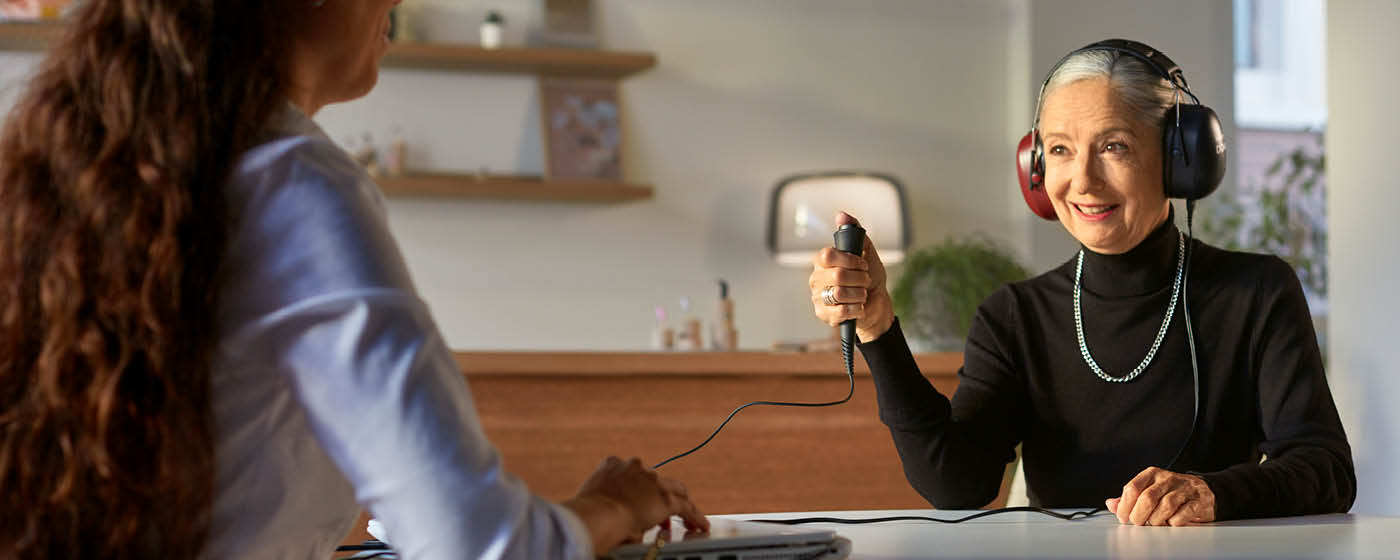
Poor hearing can result in communication difficulties for both the person with hearing loss and their family and friends. Generally in the early stages of hearing loss, a person will still be able to have a conversation in a quiet room when facing the speaker. A person suffering from hearing loss will likely experience problems with background noise or when trying to hear someone at a distance or someone who is not facing them directly.
Typically, people put off doing something about their hearing loss for an average of seven years. These people are missing out on the benefit they could receive from a hearing solution specifically designed to address their hearing needs. Taking action on hearing loss (usually the first step is a simple check-up) means there's less chance that the brain will lose the ability to process sounds and understand conversation clearly.
Hearing loss typically occurs from the age of 50 and it is not unusual for people to present with a hearing loss in their 50s or 60s. Around 35% of people over 64 years have a significant hearing loss.
Early diagnosis of hearing loss is crucial to a better quality of life in the long term because better hearing results in better communication with friends, family and work colleagues. So, a person who is in their 50s or 60s will receive a better result with their hearing solutions than if they wait until they get older before taking action.
The consequences of hearing loss are significant. Hearing loss separates you from:
- Your sound environment
- The music you love
- Your loved ones
- From those who hear well
Untreated hearing loss can have consequences such as: loss of confidence, irritability and anger, depression, social isolation and loneliness, along with anxiety and fatigue.
Typically a person who is hearing impaired may find they need to:
- Ask people to repeat themselves
- Seek clarification - Did you say, "the 24th of July?"
- Employ strategies to compensate for their hearing loss - lip read, pretend to understand.
Where to go from here?
- Check your hearing now with our online hearing test
- Read our success stories
Dr Ross Walker's Healthy Living Tips

As a doctor who's passionate about 'preventive healthcare', I've developed simple 'rules' for having a long, healthy life.
The Universal Eating Plan is really based on the fact that diets don't work. What I mean is this: if you have a special diet for a short period of time, at best it will only work for the time you follow it. What is far more sensible is to have a 'universal' dietary plan that you can follow most of the time.
1. Try to cut back on what you take in
Look at what you are consuming throughout the day and get rid of unnecessary food. Try and avoid snacking, especially on empty calories such as biscuits, cakes and confectionery.
2. Cut back on the size of your meals
Use smaller plates and don't have second helpings. And you certainly don't need dessert on most occasions!
3. Get rid of synthetic food
Forget about the GI factor and think more about the HI factor - the 'human interference' factor. The more food is processed, the worse it is for you. If it is in a box or a container with a use-by date, it's probably not very good for you, despite the advertising hype. Takeaway food is almost always even worse!
4. If you can kill it and eat it straight away, or grow it in your backyard, it's good for you
After that, all bets are off! What I am saying is that the more natural the food is, the better it is for you. The majority of meals should be based around vegetables or fruit. In addition, each week I suggest only one serving of red meat, six eggs, plus regular serves of dairy, chicken, fish, nuts and extra virgin olive oil.
5. Apply the '19 out of 21' rule
Try and stick to the above regimen for 19 out of 21 meals a week. You can relax the rules for two meals a week, so you can still go out to a restaurant or cafe without any guilt. It is what you do to your body for most of the time that's most important.
If you focus on this eating plan for the vast majority of your life, and combine it with regular exercise, you'll come to appreciate that this is one of the best ways to maintain good, robust health and vitality.